
IMI Colloquium Report (English ver.) – October 2025
2025.12.14
IMI Colloquium Report – October 2025
Date: October 8, 2025
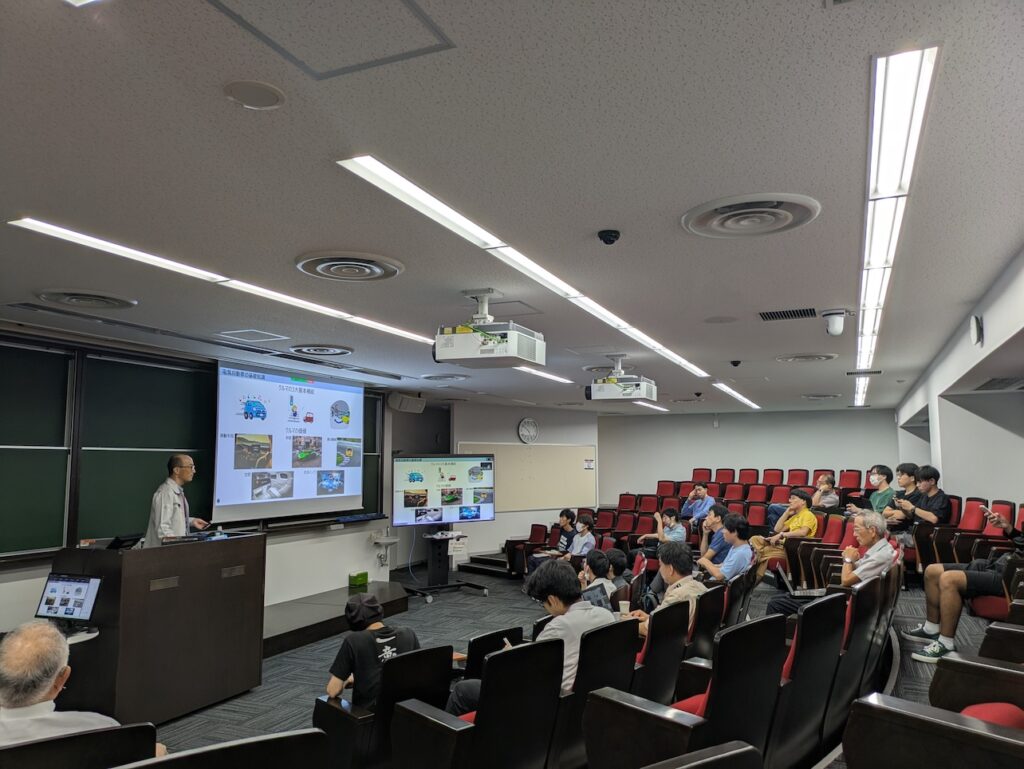
Venue: IMI Auditorium (D-413) and Online via Zoom
Speakers:
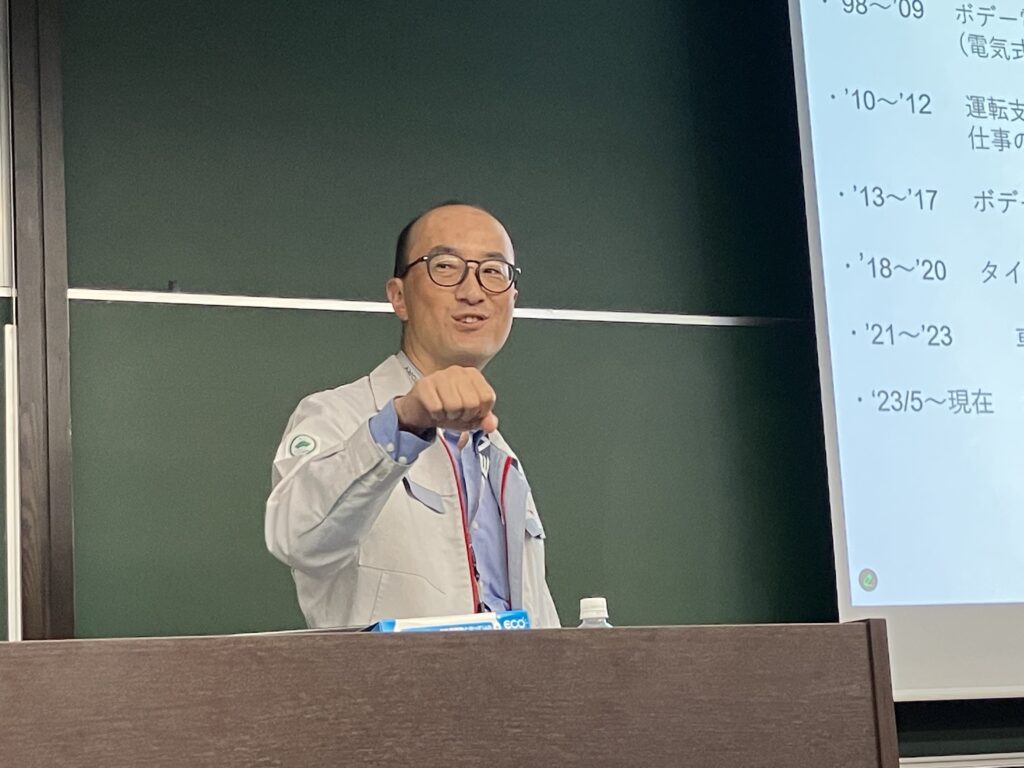
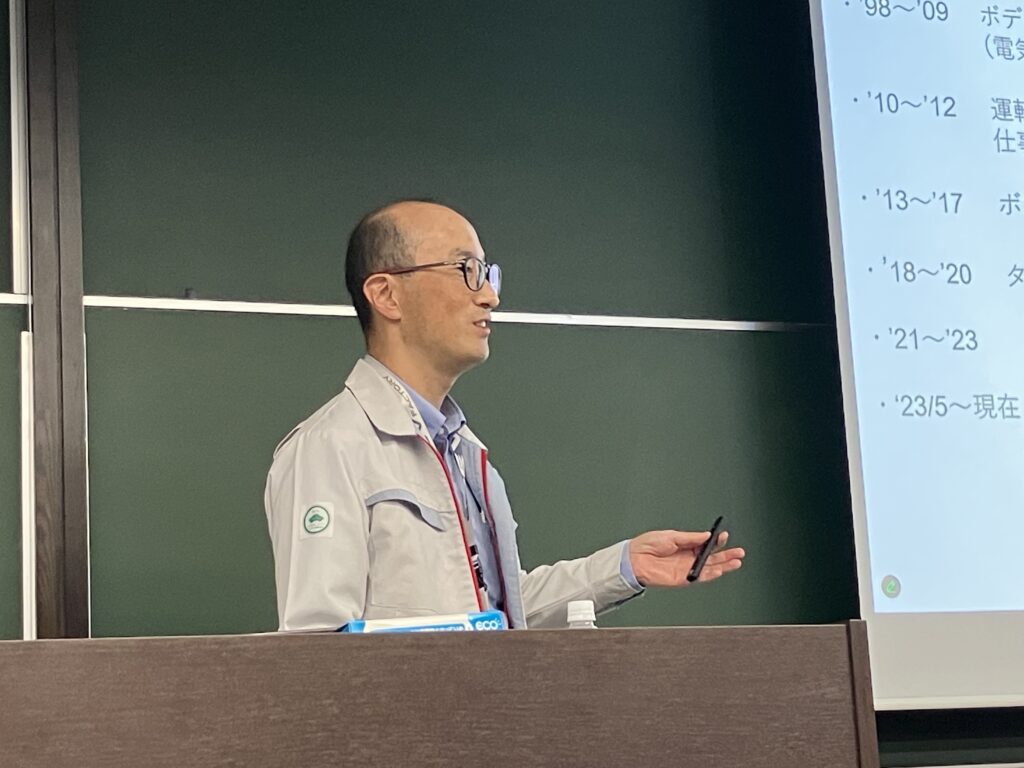
- Mr. Tomoo Kakegawa, Toyota Motor Corporation
- Mr. Masami Ikura, Toyota Motor Corporation
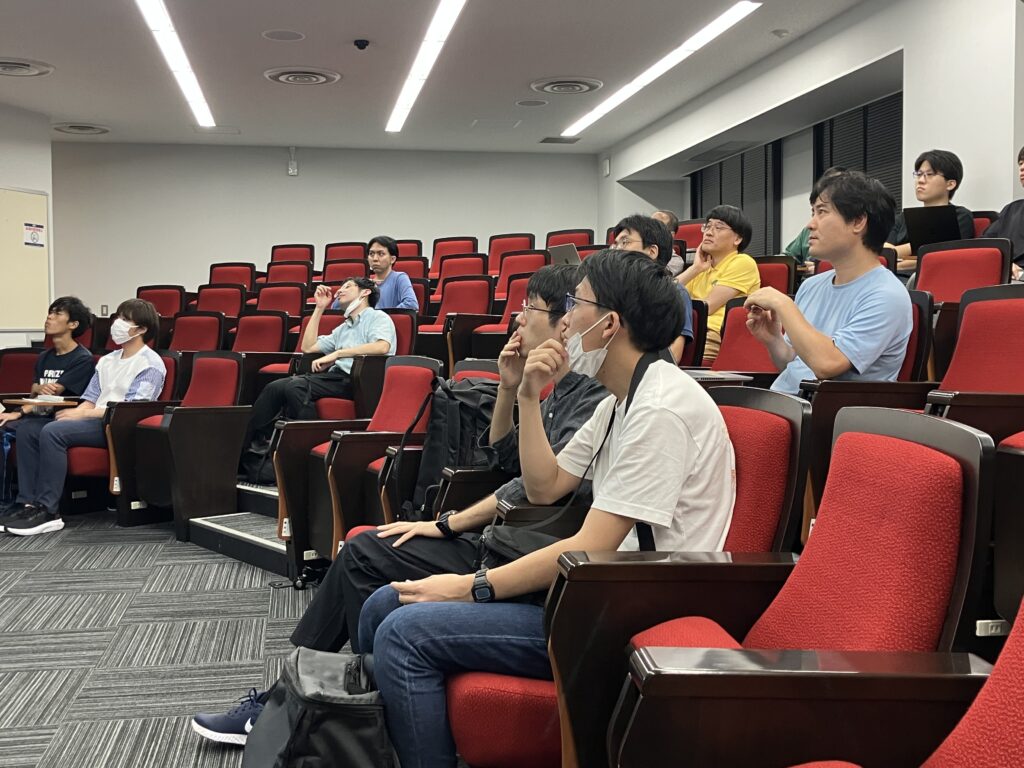
Participants: 40 attendees
- Students & Postdocs: 14
- Faculty: 17
- Private Sector & Others: 9
Title:“Characteristics and Development Challenges of Electric Vehicles”
Summary of Lecture
1. Overview
The speakers provided an in-depth introduction to electric vehicles (EVs), covering:
- Fundamental knowledge of EV technology
- Differences in development and control compared to gasoline vehicles
- The critical role of software in determining competitiveness
- Global trends in EV development
They emphasized that software defines product strength, and decisions made during the initial planning stage are crucial. Mathematical characteristics, such as air resistance, were highlighted as key factors.
2. Software Development for EVs
- To improve development speed and control efficiency, EVs require multiple domain controller (DC) architectures, unlike traditional systems.
- A redefinition of development approaches for both hardware and software is essential.
3. Key Development Challenges
The speakers outlined three major challenges Toyota faces in EV development:
a. Power Management
- EVs are battery-dependent and highly sensitive to power consumption.
- Usage conditions and owner behavior introduce variability, requiring comprehensive and efficient control strategies.
b. Failure Prediction
- Ensuring and explaining product quality is critical.
- Detecting anomalies before failures occur is essential, using continuous analysis of CAN (Controller Area Network) data to identify early warning signs.
- Mathematical approaches are expected to play a significant role.
c. Software Quality Assurance
- Autonomous driving and integrated functions lead to massive codebases and specification documents.
- Verification costs escalate, necessitating new methods such as model-based verification and simulation.
- Mathematical techniques are increasingly important.
Conclusion
The lecture concluded by stressing that mathematical knowledge and advanced software technologies can:
- Enhance EV value and development speed
- Strengthen the competitiveness of Japan’s automotive industry
Discussion Session
Following the lecture, faculty, researchers, and students engaged in a lively Q&A with the speakers. Topics included:
- Structural and manufacturing differences between engine and electric vehicles
- Design philosophies
- Software complexity and associated challenges in EVs
The colloquium ended successfully with active participation and exchange of ideas.